Salaams from India
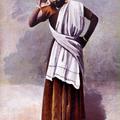
Perhaps the most popular of the "Greetings from" postcards from India was this "Salaams from" version by the large Delhi publisher, H.A. Mirza & Sons.
Perhaps the most popular of the "Greetings from" postcards from India was this "Salaams from" version by the large Delhi publisher, H.A. Mirza & Sons.
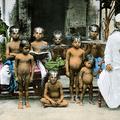
A really well hand-tinted postcard, the boys foregrounded in unflinching skin tones while master is enveloped in white.
![[Child and Dog]](https://www.paperjewels.org/sites/default/files/styles/square_thumbnail/public/slides/child-and-dog.jpg?itok=88BXTF5X "[Child and Dog]")
A most unusual postcard of a colonial family's two beloved creatures, carefully composed together in the studio, ready for the girl's family to send to relatives.
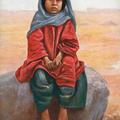
[Original caption] An Afridi Girl. The Afridis are an Afghan or Pathan people, numbering about 300,000, inhabiting the moutainous region south of the Hindu-Kush. They consist of a number of separate clans, often at feud with each other.
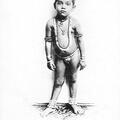
Little children were one of the most popular subjects of early postcards from Chennai (Madras). Many of the little children in these postcards wore – or were dressed with – a lot of jewelry, which would have made them compelling subjects.
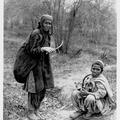
Mela Ram was a photographer who might have warmly welcomed the advent of the real-photograph as a way for his art to take precedence over the vagaries of publishing in collotype or halftone using hand-tinted color to enhance images (there are few
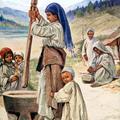
Women of Kashmir pounded grain to remove hard shells and grind it into flour using long wooden poles; those who lived in small boats moored along the banks of rivers sat at the prows while pounding grain.
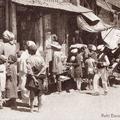
Kulri Bazaar, Mussoorie almost feels painterly in its alternating pattern light and soft dark fabrics. In the center, his back turned to us, but with no apparent import, is a British man wearing an infamous solar topee, the sartorial logo of the Raj.
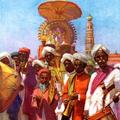
[Original caption]A Procession of Vithaba, a Mahratta Boy.
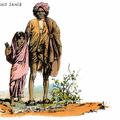
A very early postcard printed in India and signed by the Ravi Varma Press chief lithographer and also painter, Paul Gerhardt. The title "Bakshis[h] Saheb" refers to the call for alms made by beggars.
