Eid Mubarak [Eid Greetings]
![Eid Mubarak [Eid Greetings]](https://www.paperjewels.org/sites/default/files/styles/square_thumbnail/public/slides/eid-greetings-4_0.jpg?itok=yxvPcehy "Eid Mubarak [Eid Greetings]")
This lavishly illustrated card, embossed in gold outline, was printed in Germany. It shows how European figures and themes were easily repurposed for local holidays.
This lavishly illustrated card, embossed in gold outline, was printed in Germany. It shows how European figures and themes were easily repurposed for local holidays.
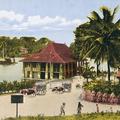
Kandy is still the religious and cultural capital of Sri Lanka, founded in the 14th Century capital of the Sinhalese kingdom from 1592-1815. The name Kandy is derived from the Sinhalese "Kanda uda pas rata", which means "five districts in the
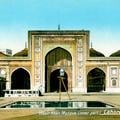
The inner courtyard (sahn) of Lahore’s Wazir Khan Mosque built in the 17th century is the mosque’s central open space, organized to frame the prayer hall (on the west) and surrounded by arched cloisters that create a rhythmic, enclosed “room” of sky.
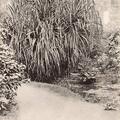
The “screw pine” at the Horticultural Gardens in Madras refers to Pandanus species (often Pandanus utilis / Pandanus odorifer), striking monocot trees with spiralling leaves and stilt‑like aerial roots that were prized as ornamental and economic
![[Woman at loom]](https://www.paperjewels.org/sites/default/files/styles/square_thumbnail/public/slides/woman-at-loom_0.jpg?itok=KOmoyvGo "[Woman at loom]")
K. Lall & Co. were a publisher of interesting real photo postcards, like this one of a cotton spinner, whose flat composition speaks to a style of portrait photography not common among photographers.
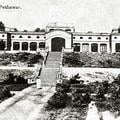
When NWFP [now Khyber Pakhtunkhwa] was created in 1901, a legal framework (NWFP Law and Justice Regulation VII) was enacted to set up judicial institutions for the new province under a Judicial Commissioner, placing the province’s highest judicial
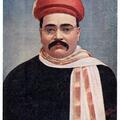
Gopal Krishna Gokhale (1866–1915) was a leading moderate nationalist, social reformer and parliamentarian in early 20th‑century India, best known as founder of the Servants of India Society and as an important political mentor to both M. K.
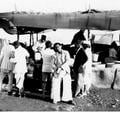
The Karachi Congress party meeting, held six days after Bhagat Singh was executed on March 23, 1931, was a tense affair.
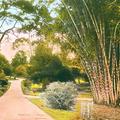
These 600 year old gardens are near Kandy.
Originally created in the reign of the Sinhalese King Wickramabahu III during the 14th century, these gardens were improved by his successors and later by the English after their conquest of Kandy.
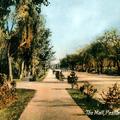
A British-cantonment era boulevard (running through the Peshawar Cantonment/Saddar area), and until recent decades could well be this peaceful and empty.
