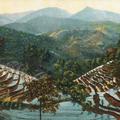
Rice Fields, Ceylon
Traditional wet rice farming involves keeping the rice seeds and young plants submerged under water to keep weed infestation at bay until the young rice plants are well established.
The Sri Lankan tea industry grew from 250 acres under cultivation in 1876 to almost 400,000 acres in 1900.8 Some 150 million tonnes of tea were produced in 1900 worth 50 million rupees, half of Ceylon’s total exports.
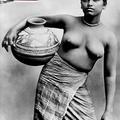
Plate & Co., like many Ceylon-based firms, published semi-nude postcards of women, more common here than even in South India, including this card with a nicely placed purple stamp.
This beautiful postcard was part of the Ceylon Tea Propaganda Board's (CTRB) evangelizing mission to demonstrate the island's rich tea economy.
Tea was one of those commodities that benefitted from the marketing that came with postcards, going back to the late 1890s.
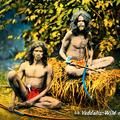
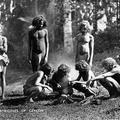
This postcard of the original inhabitants of Sri Lanka [Ceylon] was made from a photograph by Charles Scowen, one of the great photographers of the 19th century, as was likely taken in the 1870s.
One of my favourite postcards by the great Colombo publisher Plate & Co., simply because the girl's stare or startled expression is so memorable. Although I used the color version in the book, this seems just as gripping. What is she looking at?
The original inhabitants of Ceylonese island, now called Sri Lanka, as far as we know were Veddas.
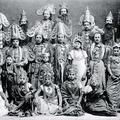
This remarkable postcard shows Shankardas Swamigal's Tamil drama group on a visit to Ceylon [Sri Lanka] in 1890, although the postcard is from about 15 years later.
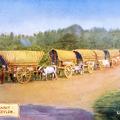
The tea industry was so important to Ceylon, that postcards illustrated each step in the process of picking, drying and transporting tea to the harbor at Colombo from where it was shipped abroad.