Patiala State Court
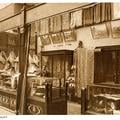
The Patiala State Court was one of the “courts” within the Indian Pavilion at the British Empire Exhibition in Wembley, 1924, a state-branded display space for Patiala’s produce, crafts, and commerce.

The Patiala State Court was one of the “courts” within the Indian Pavilion at the British Empire Exhibition in Wembley, 1924, a state-branded display space for Patiala’s produce, crafts, and commerce.
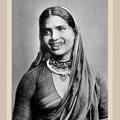
Smiles on postcards from the early 1900s are rather rare, possibly because most portraits required the sitter to stay still for many seconds while the exposure was made, especially in the 19th century when most portraits were struck and re-purposed
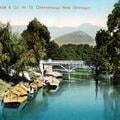
An exceptionally well-reserved postcard, with the deep blue of the water reflecting how these early color postcards appeared as jewels to consumers who had not seen printed color images so widely and inexpensively available until shortly after 1900.
![[Villagers at Well]](https://www.paperjewels.org/sites/default/files/styles/square_thumbnail/public/slides/villagers-well_0.jpg?itok=vLDASFd9 "[Villagers at Well]")
A really special postcard, a view of rural life usually invisible on to these casual slips of paper.
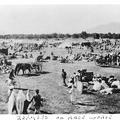
Millions of refugees moved between the new states of India and Pakistan in 1947, and Johnny Stores, run by the photographer Janki das since about the 1920s, was one of the rare photographers of both sides. His Wharf, Karachi actually shows Hindus
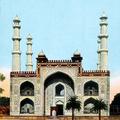
Akbar started building his own tomb at Sikandra, but it was completed by his son Jehanghir in 1605. Although it said that a central dome is missing on this edifice, it remains one of the most exquisite of Mughal gates.
[Verso] "23.8.11 Dear Molly,
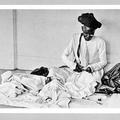
Nestor Gianaclis, like D. Macropolo & Co., another Greek-owned firm, was not primarily a photographer so much as a Greek tobacco merchant whose Calcutta office also issued collotype picture postcards and photographic prints in the early 1900s.
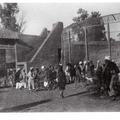
A rare candid shot of a zoo in colonial times. Apparently, Peshawar had a small zoo in the those times located in Shahi Bagh (the “Royal Garden”), a government-owned garden being developed into public pleasure grounds.
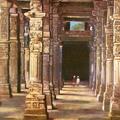
[Original caption] Colonnade, Hindoo Pillars, Kutub Minar. The Pillars, taken by the Mughal conquerors of India from a Hindoo temple, were recut to free them from idols and used to form the colonnade to the mosque.
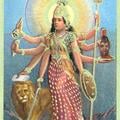
In Hinduism, Durga is a form of Devi, the supreme goddess. Durga is depicted as a warrior woman riding a lion or a tiger with multiple hands carrying weapons and assuming mudras, or symbolic hand gestures.
