Comrades
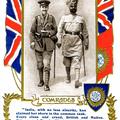
"India, with no less alacrity, has claimed her share in the common task. Every class and creed, British and Native, Princes and People, Hindoos and Mahomedans, vie with one another in a noble and emulous rivalry.
"India, with no less alacrity, has claimed her share in the common task. Every class and creed, British and Native, Princes and People, Hindoos and Mahomedans, vie with one another in a noble and emulous rivalry.
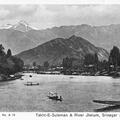
[Verso in ink, no name] "My first mooring place. The mountain in background supplies Srinagar reservoir at Hewan [? Hokar Sar?] - situated at its base. No man or beast may walk upon it.
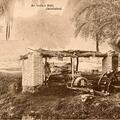
A rustic sepia view of a well in the northern SIndhi city of Jacobabad, named after the British General John Jacob (1812-1858), and today one of the hottest places in the world, with a mean temperature of almost 100 degrees Fahrenheit (37 degrees
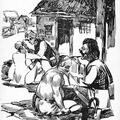
J. D. Gondhalekar (1909-1981) was an Indian artist from a Pune family that owned a successful printing press. He studied at the Slade School of Art in London and in the 1950s served as the Dean of the J. J. School of Art in Bombay.
![Mon Brave Hindou [My Brave Indian]](https://www.paperjewels.org/sites/default/files/styles/square_thumbnail/public/slides/mon-brave-hindou-2.jpg?itok=nR-XO2aQ "Mon Brave Hindou [My Brave Indian]")
The "Generous Scotsman" is saying: “You are not hot, my brave Indian . . . what do you want I am not offering you my pants!”
Note that the word "Hindou" on French postcards from World War I was used to refer to Indians in general; this was intended
[Verso] "Mission Hospital, Kolar, India.
Dear aunt Connie:
This will not reach you until after your birthday. Am sorry I did not get it off before. Hope you have a very happy day. This center piece was made in a Mission School. Much Love, Edith.

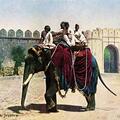
A delicately hand tinted view of Akbar's Tomb outside Agra, built by his son Jehanghir between 1605 and 1613.
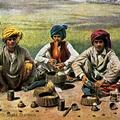
Given how ubiquitous the trope of snake charmers and India was in popular Western culture in the early 20th century, it is refreshing to find that they are not as common in postcards as one might expect. True, major publishers like Clifton & Co.
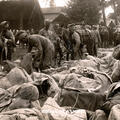
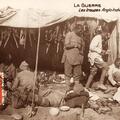
A candid image of Indian troops in Ashurst, Hampshire, England unpacking their kit most likely before being sent to the war front in Europe during World War I.
A very nicely stamped postcard, with the upside down figure, symbol of France, if the the "language" of stamp positioning holds in this case, asking "Do you remember me?"
The photograph is also exceptional, with its details of the men's kits, the
