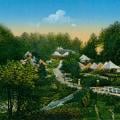
Upper Topa in the Murree Hills was established by the British during colonial rule as a military base, and today hosts the Military College Murree at an altitude of over 2,000 metres.
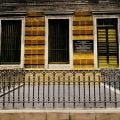
One of the most ornate and lavish rooms within the Lahore Fort. Built during the Mughal emperor Shah Jahan's 17th century reign, the Shish Mahal ("Shish" means mirror) is noted for its beautiful mirror work.
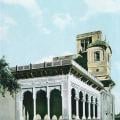
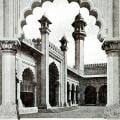
The Indian Pavilion at the 1924 British Empire Exhibition (Wembley) was designed as a major “showpiece” building in an Indo‑Saracenic/Mughal-revival idiom, explicitly modelled on iconic North Indian monuments (often described as drawing on the Jama…
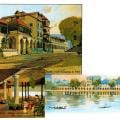
This was probably an advertising card for the Queen's Hotel, Kandy Lake, near the Temple of the Buddha's Tooth, and one of Sri Lanka's oldest continuously operating hotels, opened in 1869.
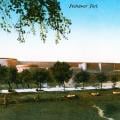
After Ahmad Shah Durrani took Peshawar in 1747, Bala Hissar served as a royal residence for the Durrani Empire. This period is strongly associated with the fort’s role as an Afghan administrative and courtly center in the frontier city.
[Original caption on front, shown here] "The blow that was hurled at us this afternoon was a nail in the coffin of the British Empire. Nobody who has seen it is ever likely to forget it. It has sunk deep into our own soul.
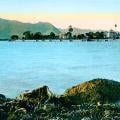
Udaipur is home so many beautiful lakes and often called the "Venice of the East."
The Lake Palace, also called Jag Niwas or Jagmunda Palace, is the biggest tourist attraction in Udaipur and was constructed by Maharana Jagat Singh II in the mid-18th…
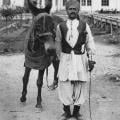
A muleteer in World War I was a mule driver/handler employed by an army’s transport services to move supplies (and sometimes evacuate wounded) using pack mules, especially where roads were poor and wheeled vehicles couldn’t operate.
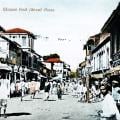
"Bhowani Street" in Pune refers to a street in Bhavani Peth (also spelled "Bhowani Peith" in colonial-era usage), one of the seventeen historic peths (wards/neighborhoods) that constitute old Pune.