A Native Shop
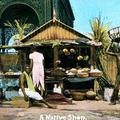
This well-posed image of a fruit and spice store is appropriately shadowed by the iron framed structure behind it.
This well-posed image of a fruit and spice store is appropriately shadowed by the iron framed structure behind it.
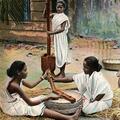
Postmarked Montral December 22, 1907 and sent to Miss Undine [?] Hemming, 213 West 16th St., Los Angeles, CA with this message: "14 Helen St., Montreal. Dear Undine, Have not had a word from any of you for quite a long period.
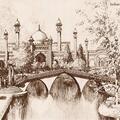
The Indian Pavilion was one of the larger country pavilions at the 1924 British Empire Exhibition held in Wembley, London. Ernest Coffin (1868-1944) was a British artist and illustrator active in the early 20th century.
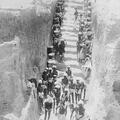
While it is unclear where and when this postcard was taken, it could have been in 1899-1900 when there was a large famine in Hyderabad with relief works photographed by Raja Lala Deen Dayal.
![Tuck's, Lahore [Envelope]](https://www.paperjewels.org/sites/default/files/styles/square_thumbnail/public/slides/tucks-lahore-envelope.jpg?itok=b73iKZFg "Tuck's, Lahore [Envelope]")
What did a postcard envelope look like? During the early "Golden Age" of postcards, they often came in sets of six, a remnant perhaps of lithographic printing presses where 4 sets of 6 images fit well into the bow that was used to imprint the paper.
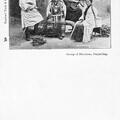
A very early Tuck's postcard of India, and likely among the earliest of Darjeeling. Made from an albumen photograph by Bourne & Shepherd, whose credit is visible on the bottom right of the photograph.

In one of the earliest series of postcards of India by Tuck, four of the six Kanpur postcards recalled events a half-century earlier; the "Mutiny," as the British called this major uprising against their rule remained very much part of colonial
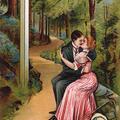
These generic postcards, with a different city slapped on the top signboard and the message, were rare in British India, perhaps because of the most incongruous scene and in this case, forest setting.
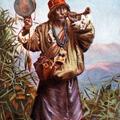
[Original caption] A Lama Beggar. The Lamas are priests of the great Buddhist religion.
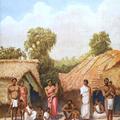
[Original caption] A Jungle Village. The jungle villages of Ceylon are picturesque in the extreme, and rendered more so by the abundance of tropical verdure.
