Lala Lajpat Rai
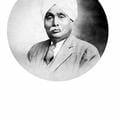
[Original caption on front, shown here] "The blow that was hurled at us this afternoon was a nail in the coffin of the British Empire. Nobody who has seen it is ever likely to forget it. It has sunk deep into our own soul.
[Original caption on front, shown here] "The blow that was hurled at us this afternoon was a nail in the coffin of the British Empire. Nobody who has seen it is ever likely to forget it. It has sunk deep into our own soul.

A muleteer in World War I was a mule driver/handler employed by an army’s transport services to move supplies (and sometimes evacuate wounded) using pack mules, especially where roads were poor and wheeled vehicles couldn’t operate.
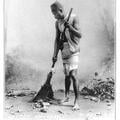
Clifton & Co. published many studio-posed, ethnographic type postcards like this one, made from an albumen print with the firm's title and name inscribed in the negative and visible at the bottom of the frame on this court-sized card.
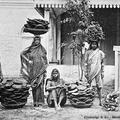
[Verso, in pencil] "You think your job is bad?" [end]
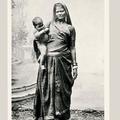
Postmarked Calcutta January 12, 1912 and sent to Ed Froehmer [sp?], Seward, Nebraska, USA.
[Verso] "Calcutta, India January 1012. This is the way that an Indian mother carries her child."
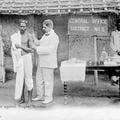
Postmarked May 7, 1904, Sea Post Office, Mumbai. Addressed to “Miss. R. Kennedy, Viewmont Drive, Gilshochill, Mary Hill, Glasgow, Scotland.”
“Dear Ruby, when I see you I shall be able to explain this p.c. [postcard] to you. With my love, John [sp?]”
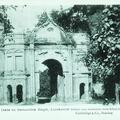
Stormed during the Second Relief of Lucknow, inside the gateway thousands of people were killed in what is sometimes termed a mass killing by British troops, but on this postcard is celebrated as a battle triumph.
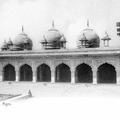
The Moti Masjid inside Agra Fort was a private royal mosque commissioned by the Mughal emperor Shah Jahan and built in the mid-17th century, using white marble that gave it the “pearl” name.
![[Ritz Hotel]](https://www.paperjewels.org/sites/default/files/styles/square_thumbnail/public/slides/ritz-hotel_0.jpg?itok=6mJycLJX "[Ritz Hotel]")
Originally the Hill Fort Palace of the Nawab of Hyderabad, the Government of India leased the property to the RItz Hotel Company around 1955 which operated a hotel here for decades.
![[Connaught Circle, Delhi]](https://www.paperjewels.org/sites/default/files/styles/square_thumbnail/public/slides/connaught-circle_0.jpg?itok=eaSsOHfD "[Connaught Circle, Delhi]")
Connaught Circle was built as part of Lutyen's Delhi between 1929 and 1933 to be the principal commercial plaza of New Delhi. Rangoon Studio was a well-known photographic studio at 58, Janpath and seems to have closed later as rents rose.
