(Late) Sukhdeo
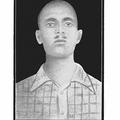
Sukhdeo (Sukhdev) was born as the son of Ram Lal in Lyallpur (now Faisalabad in Pakistan).
Sukhdev (1907 - 1931) was a very popular revolutionary in India's freedom struggle.
Sukhdeo (Sukhdev) was born as the son of Ram Lal in Lyallpur (now Faisalabad in Pakistan).
Sukhdev (1907 - 1931) was a very popular revolutionary in India's freedom struggle.
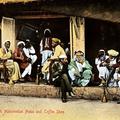
Maybe it is the hookahs and Arab head dress of the main in the green robe smoking a cigarette, but this seems to be a scene in Bombay bazaar. The electrotype (imprint on the back) matches that of Clifton & Co.
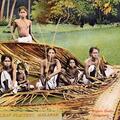
Early postcards from the Malabar coast seem to be relatively rare. In the message below, "Dusk" seems to be a dog.
[Verso] "6-5-20. Aren't they smartly pretty? I expect Dusk would like to bite this calf don't you?
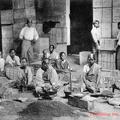
A nice representation of a small portion of the human labor – a dozen people here – that went into the preparation and production of a commodity like tea.
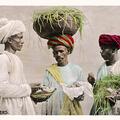
A delicately hand-tinted postcard, with the green stalks breathing life into the frozen men.
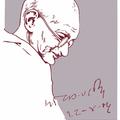
Mahatma Gandhi, the father of Indian Independence, from a series celebrating heroes of the struggle.
[Recto, Translated from Gujarati] “Mahatma Gandhi started a novel non- violence war.
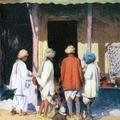
Postcard from a painting by Mortimer Menpes for the book INDIA by Flora Ann Steel. Published by A. & C. Black & Co.
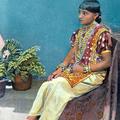
A lavishly illustrated studio postcard; note how the presumably dancer is displaying her ghungroos on her ankles.
Compare to the black and white collotype of the same photograph.
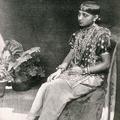
Compare to the halftone color version of the same photograph.
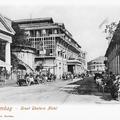
A storied building, still standing, which was everything from a Governor's residence to Admiralty House and the first High Court of Bombay.
