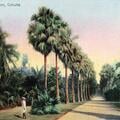
Ganeshkhind Avenue, Poona
Ganeshkhind Road, also known as University Road, is a major thoroughfare in Pune that derives its name from an ancient Ganesh temple called Parvati Nandan Ganpati Temple, dating back to the 17th century.
The Military Reformatory at Trimulgherry (MRT) stands as a significant colonial-era prison built in 1858, spanning 5 acres in Secunderabad Cantonment.
The Governor House in Nathia Gali is a historic colonial-era structure that offers stunning views including of Miranjani, the highest peak in the region, with an elevation of 2,992 meters (9,816 feet) above sea level.
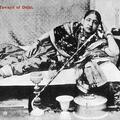
A charcoal seller she may have been, but the nose ring, choker and hookah suggest she had other skills too. This is likely a woman as she seems to be dressed in a typical Pahari style of the era.
Built between 1867 and 1869, Watson's Hotel was India's first cast-iron building and one of the earliest examples of prefabricated architecture.
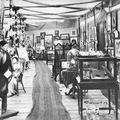
The Indian Pavilion was one of the larger country pavilions at the 1924 British Empire Exhibition held in Wembley, London. Ernest Coffin (1868-1944) was a British artist and illustrator active in the early 20th century.
No doubt one of the earliest and very few postcards of this remote hillstation in Balochistan, some 80 miles from Quetta through a juniper forest.
The Ripon Hospital in Shimla, now known as Deendyal Upadhyay Zonal Hospital, has a rich history dating back to the British colonial era.
The Gurdwara Panja Sahib, is a highly revered Sikh shrine located in the town of Hasanabdal in Attock District, Punjab, Pakistan is associated with Guru Nanak, the founder of Sikhism.
This is a superbly hand-tinted postcard, with both swathes of color (pink and blue) and individual color specs in the crowd mixed with the black ink of the collotype enhancing the effect of a real crowd praying.