The Little Sick Boy
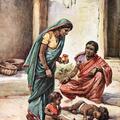
Evelyn Stuart Hardy (1865-1935), the artist who signed this card, was a British illustrator and author known for her contributions to children's literature and periodicals in the late 19th and early 20th centuries.
Evelyn Stuart Hardy (1865-1935), the artist who signed this card, was a British illustrator and author known for her contributions to children's literature and periodicals in the late 19th and early 20th centuries.
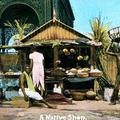
This well-posed image of a fruit and spice store is appropriately shadowed by the iron framed structure behind it.
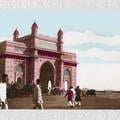
A triumphal arch erected to commemorate the visit of King George V and Queen Mary in 1911, it was completed in its present form in 1924. The Gateway of India was built in the Indo-Saracenic architectural style, combining multiple design elements and
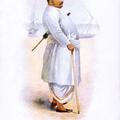
A fine portrait by M.V. Dhurandhar of a Gujarati broker. Gujrati brokers played a pivotal role in Bombay's commercial development during the late 19th and early 20th centuries.
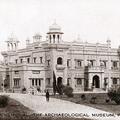
The Victoria Memorial Hall in Peshawar, established in 1907, evolved from a British colonial ballroom into a significant archaeological museum.
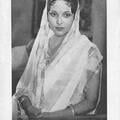
Devika Rani was a pioneering figure in Indian cinema, often hailed as the "First Lady of Indian Cinema." Born on March 30, 1908, in Visakhapatnam, she was the grand-niece of the Nobel Prize-winning poet Rabindranath Tagore.
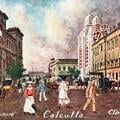
Sujaan Mukherjee writes of Frank Clinger Scallan's postcards of Calcutta: "The artist may or may not have used photographs as reference, but unlike most photographs that depict churches, public buildings or trams, these drawings recall a city that is
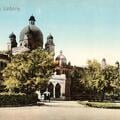
The Lahore Museum was one of the most significant colonial-era museums in British India, established in 1865 and relocated to its current location shown here on Mall Road in 1894. A few years later it became world famous when Rudyard Kipling began
![[Beegun Songstress of Lucknow]](https://www.paperjewels.org/sites/default/files/styles/square_thumbnail/public/slides/beegun-lucknow-color.jpg?itok=rsZGZMsG "[Beegun Songstress of Lucknow]")
The title comes from a collotype with this title.
![Tuck's, Lahore [Envelope]](https://www.paperjewels.org/sites/default/files/styles/square_thumbnail/public/slides/tucks-lahore-envelope.jpg?itok=b73iKZFg "Tuck's, Lahore [Envelope]")
What did a postcard envelope look like? During the early "Golden Age" of postcards, they often came in sets of six, a remnant perhaps of lithographic printing presses where 4 sets of 6 images fit well into the bow that was used to imprint the paper.
