Ancient Buddhist Temple Gwalior
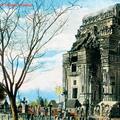
Buddhism had largely departed India by this time, having flourished between the 3rd century BCE and 13th century CE, but its temples still stood and were frequently subjects of postcards.
Buddhism had largely departed India by this time, having flourished between the 3rd century BCE and 13th century CE, but its temples still stood and were frequently subjects of postcards.
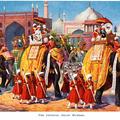
The Delhi Durbar of 1911 was one of the most "postcarded" events of the Raj, and the first time a reigning British monarch, George V and his wife Queen Mary (an avid postcard collector) attended.
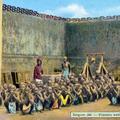
Ahuja's colorful halftones with inscribed titles are distinctive. His postcards covered not only Burma, but many of the Indian singers and others settled in this British colony loosely attached to the Raj, as well as Indian cities like Amritsar.
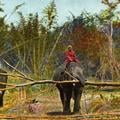
It is unclear where this image is from, but elephants were used during colonial times in Assam, Bengal and Malabar to haul logs out of forests.
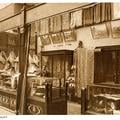
The Patiala State Court was one of the “courts” within the Indian Pavilion at the British Empire Exhibition in Wembley, 1924, a state-branded display space for Patiala’s produce, crafts, and commerce.
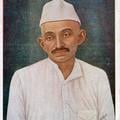
An early postcard of Gandhi, signed by K.L. [?] Joshi and dated 1921, not long after he had been termed the "Mahatma" by Rabindranath Tagore (1915) and had launched the First Non-Cooperation Movement in 1920.
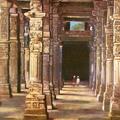
[Original caption] Colonnade, Hindoo Pillars, Kutub Minar. The Pillars, taken by the Mughal conquerors of India from a Hindoo temple, were recut to free them from idols and used to form the colonnade to the mosque.
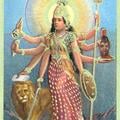
In Hinduism, Durga is a form of Devi, the supreme goddess. Durga is depicted as a warrior woman riding a lion or a tiger with multiple hands carrying weapons and assuming mudras, or symbolic hand gestures.
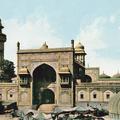
Known for its beautiful "faience" work, a type of fine pottery-tile artwork, the historic Wazir Khan mosque in the walled city of Lahore was built during the reign of the Mughal Emperor Shah Jahan by Shaikh Ilm-ud-din Ansari between 1634 and 1641.
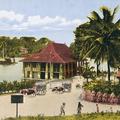
Kandy is still the religious and cultural capital of Sri Lanka, founded in the 14th Century capital of the Sinhalese kingdom from 1592-1815. The name Kandy is derived from the Sinhalese "Kanda uda pas rata", which means "five districts in the
