India
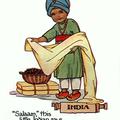
A standard depiction of the colony as a trunk full of raw materials, this series seems to have been started in the 1900-1910 period and persisted into the 1940s.
This postcard is postmarked Anerle, May 5, 1942 and sent to a Miss Pound, Jubilee
A standard depiction of the colony as a trunk full of raw materials, this series seems to have been started in the 1900-1910 period and persisted into the 1940s.
This postcard is postmarked Anerle, May 5, 1942 and sent to a Miss Pound, Jubilee
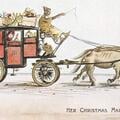
[Original handwritten message, verso] "25/11 Dear David, These are the funny old carriages which we see every day in Calcutta. The old lady has been shopping for Christmas."
An fascinating article on the artist behind this postcard, George Darby, by
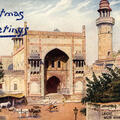
A card with over-printed Christmas Greetings, hard to find but not unusual.
[Original caption] Wazir Khan's Mosque (Outer Part) Lahore.
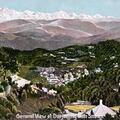
The London based publisher F.
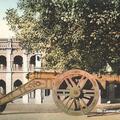
Standing in front of the Lahore Museum, this cannon became known as "Bhangian Di Top" (Cannon of the Bhangis) after it was captured by Hari Singh Bhangi and his forces in 1762, one of the Sikh confederacies.
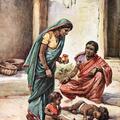
Evelyn Stuart Hardy (1865-1935), the artist who signed this card, was a British illustrator and author known for her contributions to children's literature and periodicals in the late 19th and early 20th centuries.
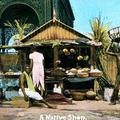
This well-posed image of a fruit and spice store is appropriately shadowed by the iron framed structure behind it.
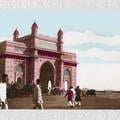
A triumphal arch erected to commemorate the visit of King George V and Queen Mary in 1911, it was completed in its present form in 1924. The Gateway of India was built in the Indo-Saracenic architectural style, combining multiple design elements and
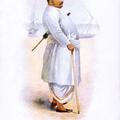
A fine portrait by M.V. Dhurandhar of a Gujarati broker. Gujrati brokers played a pivotal role in Bombay's commercial development during the late 19th and early 20th centuries.
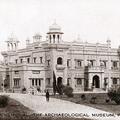
The Victoria Memorial Hall in Peshawar, established in 1907, evolved from a British colonial ballroom into a significant archaeological museum.
