45th Rattray's Sikhs

This postcard appeared in connection with the publication The Armies of India by Col. A.C. Lovett and Major C.F. MacMunn (1911). Lovett served as illustrator, A. & C.
This postcard appeared in connection with the publication The Armies of India by Col. A.C. Lovett and Major C.F. MacMunn (1911). Lovett served as illustrator, A. & C.
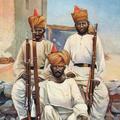
[Original caption] The native tribes of India have, since the first occupation of the country by the British, been trained to act as soldiers to guard their own districts.
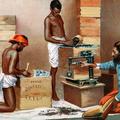
[Original caption] The amount of tea exported from Ceylon annually exceeds 150,000,000 lbs., and about 400,000 coolies from Southern India are employed in the tea gardens.
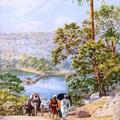
[Original caption] Narsingarh - The Lake. Narsingarh is the capital of the state of that name in central India. It was founded in 1687 and is most picturesquely located on the shore of an artificial lake with a fort and palace on the height above.
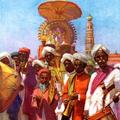
[Original caption]A Procession of Vithaba, a Mahratta Boy.
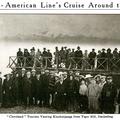
Hamburg-American Line was one of the largest shipping lines in the world, and brought a majority of German immigrants to the US, as and many tourists from the US to India.
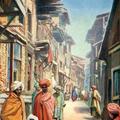
[Original caption] A Native Village Street. Although many buildings in India are solid, substantial structures of considerable architectural interest, most of the villages and towns are made up of houses built entirely of wood.
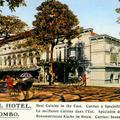
Hotel advertising postcards played an important role in the rise of the medium; they are often found in guest rooms today too, ready to send home and market the establishment where a loved one is staying.
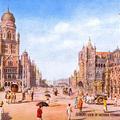
[Original caption] Bombay. View of Victoria Terminus & Municipal Building. Bombay is by fat the most European in appearance of all the cities of India.
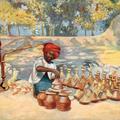
[Original caption] The Native Potter is a familiar figure in the streets of Indian towns.
