A Mohamedan Fakir
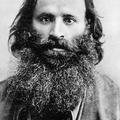
John Campbell Oman (1841-1911), author of The Mystics, Ascetics and Saints of India (1903) describes the incident that made him take it upon himself to write this encyclopedic work towards the end of his life.
John Campbell Oman (1841-1911), author of The Mystics, Ascetics and Saints of India (1903) describes the incident that made him take it upon himself to write this encyclopedic work towards the end of his life.
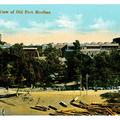
Compare this hand-colored view to the identical more detailed black-and-white postcard of the old fort and mausoleum of Shah Rukn-e-Alam.
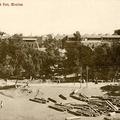
Multan, although a large city and railway junction in southern Punjab, does not appear frequently on postcards.
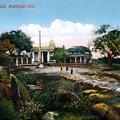
This 16th century temple to Nandi, the sacred bull, was built by Kempe Gowda who also founded the city of Bangalore.
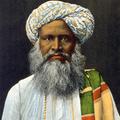
An unusual postcard in the use of so much black, which beautifully brings out the portrait of this man, his beard and clothing (black was expensive for printers due to the amount of ink consumed). Due to better economic prospects in Sri Lanka, during
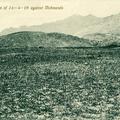
There are a limited set of Raj postcards showing battlefields, even after the fact.
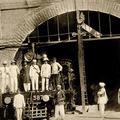
This postcard shows some of the team that constructed the Khojak Tunnel in Balochistan, one of the great feats of 19th century engineering in the subcontinent. Almost 2.5 miles in length, numerous European engineers helped in its construction.

One of my favourite postcards by the great Colombo publisher Plate & Co., simply because the girl's stare or startled expression is so memorable. Although I used the color version in the book, this seems just as gripping. What is she looking at?
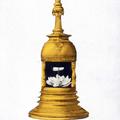
The Sacred Relic of the tooth of Buddha is venerated in Sri Lanka [Ceylon] as relic of Gautama Buddha, and is kept in a Temple of the Holy Tooth in Kandy.
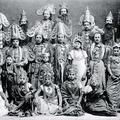
This remarkable postcard shows Shankardas Swamigal's Tamil drama group on a visit to Ceylon [Sri Lanka] in 1890, although the postcard is from about 15 years later.
