The Bazaar of City Multan, India
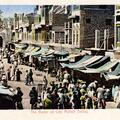
A rare postcard of one of the oldest and largest cities in southern Punjab. Note the telephone wires floating just above the stalls.
A rare postcard of one of the oldest and largest cities in southern Punjab. Note the telephone wires floating just above the stalls.
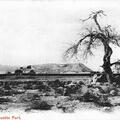
Among the earliest postcards of British Baluchistan, whose capital Quetta was leased from the Khan of Kalat in the 19th century. Bremner was one of the earliest photographers in the cantonment, having come out in the 1890s from Scotland.
![Inde Francaise Fabrication de Sacs de Jute [French India Manufacturing Jute Sacks]](https://www.paperjewels.org/sites/default/files/styles/square_thumbnail/public/slides/inde-francaise-fabrication-de-sacs-de-jute.jpg?itok=XboOh5en "Inde Francaise Fabrication de Sacs de Jute [French India Manufacturing Jute Sacks]")
Among the few postcards that depict industrial activity, this jute facility was possibly in the French colony of Pondicherry, now the Federal Union Territory of Puducherry.
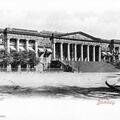
An early view of what is now The Asiatic Society. John Murray's Handbook for Travelers in India Burma and Ceylon (1938) has this description of what was once the Town Hall:
"The Town Hall, designed by Col. T.
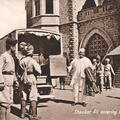
Shaukat Ali was charged with sedition in Karachi for encouraging Indian army troops to not serve in the British army, and sent to prison in Karachi's central jail.
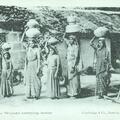
A very early blue-toned postcard from booksellers Cobridge and Co. Sent from Bombay's Sea Post Office, date unclear, to Mr. J. Sherman, 12 Middleton Square, Clerkennell, E.C. London, England: "With fondest love to all from Arthur."
![Singapore - Chinois Coiffeur un Indien [Chinese Dresses Hair of an Indian]](https://www.paperjewels.org/sites/default/files/styles/square_thumbnail/public/slides/singapore-chinois-coiffeur-un-indien.jpg?itok=wsuufplI "Singapore - Chinois Coiffeur un Indien [Chinese Dresses Hair of an Indian]")
There are few postcards available of Indians who worked, often as indentured labor, in other British possessions before Independence.
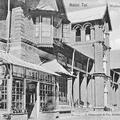
Note the lone girl in the right corner as if balancing the weight of the school, founded in the late 19th century by the American missionary Emma Knowles.
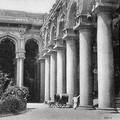
This 17th century palace, now known as Thirumalai Nayakkar Mahal, was built by King Tirumala Nayaka, of the Nayaka dynasty, and was once spread over a much larger area than what remains today.
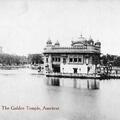
One of the earliest postcards of India published by a British-based firm, F. Hartmann & Co.
