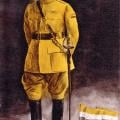
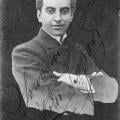
Netaji Subhas Chandra Bose (1897–1945), shown here in his Indian National Army (I.N.A.) uniform, was an Indian nationalist leader who broke with the Indian National Congress’s dominant nonviolent strategy and pursued independence through armed…
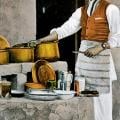
The word "bawarchi" for cook apparently entered Hindi via Urdu from classical Persian. "Chi" is a common Persian suffix meaning "a person who does or is associated with" a type of work.
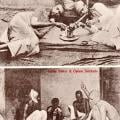
A unusual two-image postcard, almost the only one from that most prolific of publishers, Moorli Dhur & Sons. It shows two men on their sides, one of whom is smoking an opium pipe.
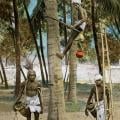
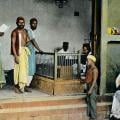
The process begins with collecting sap from coconut or palm flowers as these men are doing. Fresh sap, known as 'Neera,' is initially sweet, lukewarm, and non-alcoholic and collected in small pots attached beneath sliced unopened palm flowers.
Although opium was a major crop in the rise of the East India Company, and India the major producer of opium sent to China, with production carefully taxed and recorded, barely a handful of postcards seem to acknowledge the crop and its manufacture.
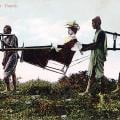
While the word "dandy" suggests being fashionable, and may be a secondary meaning, the word is said to actually come from "dandi" or the Hindi/Urdu word for stick, which are used to distribute the woman's weight across them men's shoulders.