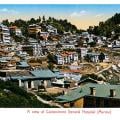
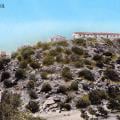
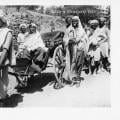
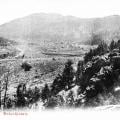
This is probably a view of Murree hillstation from the cantonment hospital. The Mall road runs behind the buildings on the top left, below them is what was known in those days as the "native bazaar."
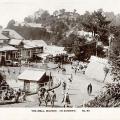
"The Mall, far from serving merely as a site for commerce or recreation, functioned as a symbolic and material articulation of imperial hierarchy, controlling access to commodities and visibility, and reinforcing notions of prestige, superiority…
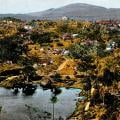
The hill station of Mount Abu, formerly part of the Chauhan Kingdom of Rajasthan, was the summer resort of the Rajput rulers. A green oasis in the barren landscape of Rajasthan.
Cherat hill’s position gave commanding views over the Peshawar valley and toward Kohat/Indus, which made it strategically useful as well as climatically attractive to colonists.
Upper Topa in the Murree Hills was established by the British during colonial rule as a military base, and today hosts the Military College Murree at an altitude of over 2,000 metres.
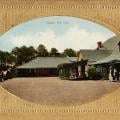
"In any town in India the European Club is the spiritual citadel, the real seat of the British power, the Nirvana for which native officials and millionaires pine in vain," wrote George Orwell in his first novel, Burmese Days (Chapter 2).
The London based publisher F. Hartmann, best known as an indigo merchant, also claimed to be the first British-based publisher of postcards of India as early as 1903.
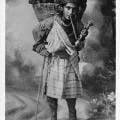
A charcoal seller she may have been, but the nose ring, choker and hookah suggest she had other skills too. This is likely a woman as she seems to be dressed in a typical Pahari style of the era.