Clive Street, Calcutta
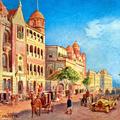
[Original caption] Clive Street, Calcutta.
[Original caption] Clive Street, Calcutta.
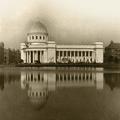
Sepia postcards were printed in a brown colour instead of black inks, and went in and out of fashion from the early 1900s through the 1940s.
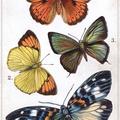
[Original caption] Butterflies and Moths pass through three very distinct stages before they attain the perfect form viz.: 1. The
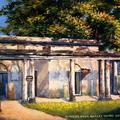
[Original caption] Held by Lieut. Aitkens during the defnense of the Residency. Here fifteen to twenty defenders were killed daily. From Johann's house opposite an African known as "Bob, the Nailer," fired incessantly and never missed a shot. [end]
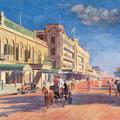
[Original caption] “Chowringhee, Calcutta. Chowringhee Road runs past the sumptuous edifice of the Bengal Club and the nest residential quarter of Calcutta to St. Paul’s Cathedral.
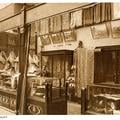
The Patiala State Court was one of the “courts” within the Indian Pavilion at the British Empire Exhibition in Wembley, 1924, a state-branded display space for Patiala’s produce, crafts, and commerce.
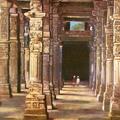
[Original caption] Colonnade, Hindoo Pillars, Kutub Minar. The Pillars, taken by the Mughal conquerors of India from a Hindoo temple, were recut to free them from idols and used to form the colonnade to the mosque.
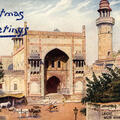
A card with over-printed Christmas Greetings, hard to find but not unusual.
[Original caption] Wazir Khan's Mosque (Outer Part) Lahore.
![Tuck's, Lahore [Envelope]](https://www.paperjewels.org/sites/default/files/styles/square_thumbnail/public/slides/tucks-lahore-envelope.jpg?itok=b73iKZFg "Tuck's, Lahore [Envelope]")
What did a postcard envelope look like? During the early "Golden Age" of postcards, they often came in sets of six, a remnant perhaps of lithographic printing presses where 4 sets of 6 images fit well into the bow that was used to imprint the paper.
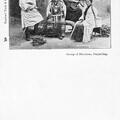
A very early Tuck's postcard of India, and likely among the earliest of Darjeeling. Made from an albumen photograph by Bourne & Shepherd, whose credit is visible on the bottom right of the photograph.
