Street Sweeper
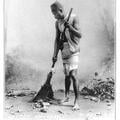
Clifton & Co. published many studio-posed, ethnographic type postcards like this one, made from an albumen print with the firm's title and name inscribed in the negative and visible at the bottom of the frame on this court-sized card.
Clifton & Co. published many studio-posed, ethnographic type postcards like this one, made from an albumen print with the firm's title and name inscribed in the negative and visible at the bottom of the frame on this court-sized card.
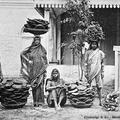
[Verso, in pencil] "You think your job is bad?" [end]
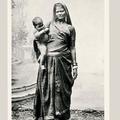
Postmarked Calcutta January 12, 1912 and sent to Ed Froehmer [sp?], Seward, Nebraska, USA.
[Verso] "Calcutta, India January 1012. This is the way that an Indian mother carries her child."
Postmarked May 7, 1904, Sea Post Office, Mumbai. Addressed to “Miss. R. Kennedy, Viewmont Drive, Gilshochill, Mary Hill, Glasgow, Scotland.”
“Dear Ruby, when I see you I shall be able to explain this p.c. [postcard] to you. With my love, John [sp?]”
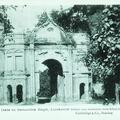
Stormed during the Second Relief of Lucknow, inside the gateway thousands of people were killed in what is sometimes termed a mass killing by British troops, but on this postcard is celebrated as a battle triumph.
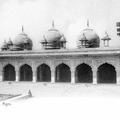
The Moti Masjid inside Agra Fort was a private royal mosque commissioned by the Mughal emperor Shah Jahan and built in the mid-17th century, using white marble that gave it the “pearl” name.
![[Unidentified Camp]](https://www.paperjewels.org/sites/default/files/styles/square_thumbnail/public/slides/camp_0.jpg?itok=tjzsuyNx "[Unidentified Camp]")
This postcard probably shows a scene near Ravi Varma's studios outside Bombay [Mumbai] near the Karli temples.
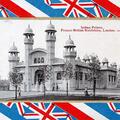
The Franco-British Exhibition of 1908, celebrating a new understanding on dividing up colonial interests between the two powers, came at the height of interest and production of the new medium of postcards.
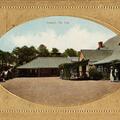
"In any town in India the European Club is the spiritual citadel, the real seat of the British power, the Nirvana for which native officials and millionaires pine in vain," wrote George Orwell in his first novel, Burmese Days (Chapter 2). First
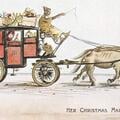
[Original handwritten message, verso] "25/11 Dear David, These are the funny old carriages which we see every day in Calcutta. The old lady has been shopping for Christmas."
An fascinating article on the artist behind this postcard, George Darby, by
