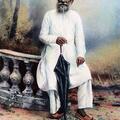
Mali, the Gardener
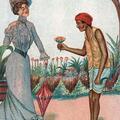
A colonial offering, on a rare lithographic card, both obsequious and a caricature of the snotty memsahib.

A colonial offering, on a rare lithographic card, both obsequious and a caricature of the snotty memsahib.

A clever advertising postcard from what what Bombay's leading bookseller and major postcard publisher at the turn of the century.
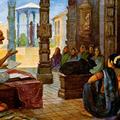
This image by the Indian painter M.V. Dhurandhar manages to convey a real sense of personality and drama to the situation through the face and gesture of the priest.
Sent to Miss C. Blackwood, R.D. Route No.
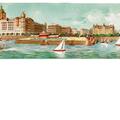
The Taj Hotel was built to realize Jamsetji N. Tata's dream of a fine hotel to reflect the ascendancy of Bombay's own mercantile class.
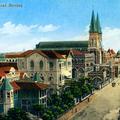
A quick glance at this postcard might make you think it is a European city, but it is actually a street in Mumbai with the Cathedral of the Holy Name, the seat of the Archbishop of Bombay. Opened in 1902, it was new around the time of this postcard.
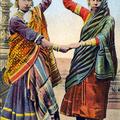
Note how carefully this postcard has been hand-tinted, even the studio carpet adding a little depth.
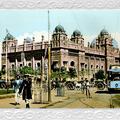
In 1913 the General Post Office moved into its present building which was designed by John Begg, the Consulting Architect to the Government during the period. Mumbai's GPO features the city's famous Indo-Saracenic architectural style.
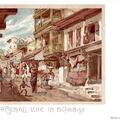
Of the nine Josef Hoffman artist-signed postcards of India published by a Viennese firm in 1898 (here in an English version for Thacker & Co.), this one is the hardest to find, why is unclear.
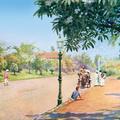
[Original caption] View of Malabar Hill. A beautiful scene and admired by all classes. A great number of bungalows are to be found here. [end]
A studio portrait of a Parsi priest, holding an umbrella.
