Chandni Chawk Street, Delhi (India)
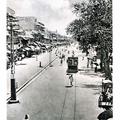
[Original caption on back] This famous street was built by Jahanara Begum daughter of Emperor Shah Jehan. It extends 1520 yards in length from Delhi Fort to Fatehpuri Mosque, and is 40 yards [wide].
[Original caption on back] This famous street was built by Jahanara Begum daughter of Emperor Shah Jehan. It extends 1520 yards in length from Delhi Fort to Fatehpuri Mosque, and is 40 yards [wide].
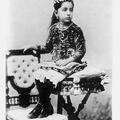
A striking image of a small Parsi girl sitting on a table with her feet on a chair, the "de [of] Bombay" added by the French sender in 1911.
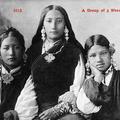
Bhutias are a Sikkimese people of Tibetan ancestry, photographed here most likely in Johnston & Hoffman's Darjeeling studio – compare to A Group of 3 Nepaulese which seems to have the same backdrop.
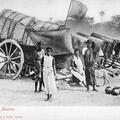
Note the diagonal leading the eye into a rich scene, the figures in the corners of the frame, the tethered cow on the left, the pots in the coals, the vibrancy of this human space under a hoisted banner.
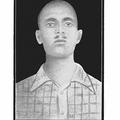
Sukhdeo (Sukhdev) was born as the son of Ram Lal in Lyallpur (now Faisalabad in Pakistan).
Sukhdev (1907 - 1931) was a very popular revolutionary in India's freedom struggle.
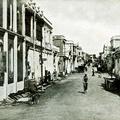
A popular image of Commercial Street in Bangalore by one of its most popular studios run by M. C. H. Doveton. Note that the poster on the left has the word "War" readable which suggests it is from around the first World War I period.
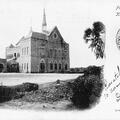
A fine example of the performative act that sending a postcard was when they first became popular. The nicely positioned and cancelled stamp, the sender's signature, "Doux Baisers" ("Sweet Kisses"), sent to his wife in France.
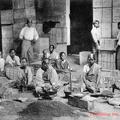
A nice representation of a small portion of the human labor – a dozen people here – that went into the preparation and production of a commodity like tea.
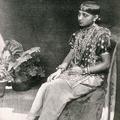
Compare to the halftone color version of the same photograph.
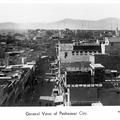
An uncommon shot of Peshawar, showing the density of habitation. In the far left is the Mahabat Khan mosque, built in the 1860s.
