Sent to R.S. Gibbons, c/o Mrs. N.L. Larler, J.G. Northhampton Road, Addiscombe, Croydon, Surrey, England: "Feb 4th [1919?]. Granny sent you 10/- [shillings] for Xmas. Ask R.M. to give it to you out of the Bank.
On the back of this self-explanatory card is a an ink blind-stamp "Greetings from My 1910 Cruise Around the World" and "Rangoon Burma Maters [sp?]." The card is postmarked Darjeeling, April 10, 1910 and addressed to "Oscar Schulze, Allegheny…
Sepia cards were printed in a brown colour instead of black inks on halftone, collotype and real photo postcards. They went in and out of fashion from 1900 through the 1940s.
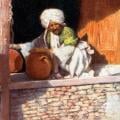
[Original caption] A Potter, Northern India. Fostered by "caste," the native craftsman remains, contentedly, throughout his life in that sphere of industry into which he was born.
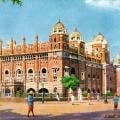
[Original caption] Delhi Gate Fort. The gateway is of red sandstone. The walls are 70 feet high and one mile and a half long. The Europeans and their followers took refuge in the Fort during the Mutiny. [end]
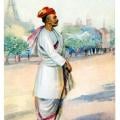
The Brahmin, as the art scholar Allan Life has noted, is reluctantly shuffling from tradition to modernity, from the temple behind him to the new city in front of him.
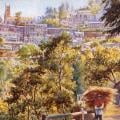
[Original caption] View from the Cart Road. Simla is in the mountainous region of the Punjab, on the southern slopes of the Himalayas. The town is beautifully laid out and the scenery is magnificent. [end]
A very nicely coloured card, using side profiles of people, a commonly trope in albumen photography, to mark the scale of a scene. An open road extends across the whole foreground. The shadows fall softly on the right.