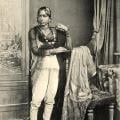
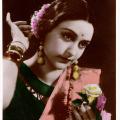
This is the same woman in Dancing Girl, apparently photographed at the same time with Lucknow's Chutter Manzil in the background, but here given a blander description.
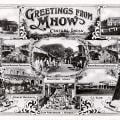
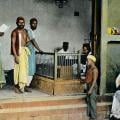
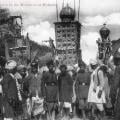
There are 14 images in this carefully constructed postcard of a cantonment town in Central India now known as Dr. Ambedkar Nagar (after the first great leader of India's Dalit community).
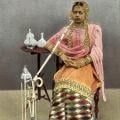
The title comes from a collotype with this title. Here the studio background has been removed, and the hand-coloring is so exquisite, especially the gold, that one could call it "hand-painted," as opposed to the usual stencil hand-tinting found on…
Although opium was a major crop in the rise of the East India Company, and India the major producer of opium sent to China, with production carefully taxed and recorded, barely a handful of postcards seem to acknowledge the crop and its manufacture.
Naseem Banu (4 July 1916 – 18 June 2002) was a prominent Indian actress who rose to fame in the 1930s and 1940s. Known for her exceptional beauty, she was often referred to as "Pari-Chehra" (fairy face).
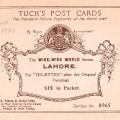
What did a postcard envelope look like? During the early "Golden Age" of postcards, they often came in sets of six, a remnant perhaps of lithographic printing presses where 4 sets of 6 images fit well into the bow that was used to imprint the paper.
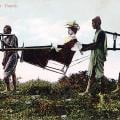
While the word "dandy" suggests being fashionable, and may be a secondary meaning, the word is said to actually come from "dandi" or the Hindi/Urdu word for stick, which are used to distribute the woman's weight across them men's shoulders.
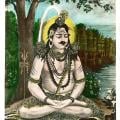
Shankar is another name for Lord Shiva, one of the most important deities in Hinduism. While hard to see in this postcard, which was printed in Germany on behalf of the publisher in Sukkur, Sindh, glitter was then added to the postcard, something…
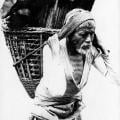
Many postcards speak to the physical labor that allowed residents of hillstations to warm their homes and cook their food, often leading men and women with permanently bent backs.