Our Dhoby, Madras
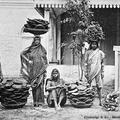
The dhobi was a favorite postcard subject, with the colors on this postcard - note the brilliant white - likely stenciled in by the publisher in India.
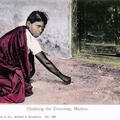
The Kolam tradition of creating complex geometric patterns, often passed down from mother to daughter, out of rice flour or chalk in front of the home is an ancient tradition in South India and elsewhere.
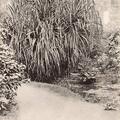
The “screw pine” at the Horticultural Gardens in Madras refers to Pandanus species (often Pandanus utilis / Pandanus odorifer), striking monocot trees with spiralling leaves and stilt‑like aerial roots that were prized as ornamental and economic
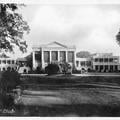
The Madras Club is a colonial-era gentlemen’s club in Chennai, founded in 1832 as an exclusive European male preserve and now one of India’s oldest surviving social clubs.
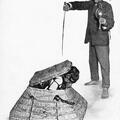
[Verso, in pencil] "You think your job is bad?" [end]
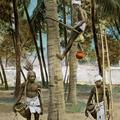
The process begins with collecting sap from coconut or palm flowers as these men are doing. Fresh sap, known as 'Neera,' is initially sweet, lukewarm, and non-alcoholic and collected in small pots attached beneath sliced unopened palm flowers.
Postmarked January 30, 1909, mailed to E.G. Joeloor [sp?] Esq., Chapel House, Chapel St. , Camborn, Cornwall, England with this message: "How would you like to go around the promenade like these two kids. Eh? Did you get the money alright? I hope so.
A thematically most unusual postcard.
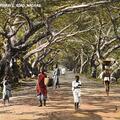
Mowbray's Road in Madras (now Chennai) was named after George Mowbray, who arrived in Madras in 1771. Originally a bullock cart track, it was acquired by George Mowbray in the late 18th century and led to Mowbray's garden house, which became the
The 6.0 km long stretch is the second largest urban beach in the world (after Cox's Bazaar in Bangladesh), shown here with part of the Senate House, the administrative heart of the University of Madras, built in the late 1870s.