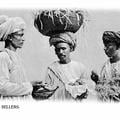
The Water Carrier (Bhistee)
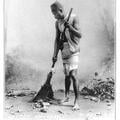
Bhistees supplied water to households and regiments
In the past, water carriers used cured hides of animals to carry water. Today animal hides have been replaced by bottles and jars of plastic.
Bhistees supplied water to households and regiments
In the past, water carriers used cured hides of animals to carry water. Today animal hides have been replaced by bottles and jars of plastic.
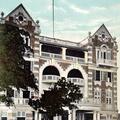
Founded in 1900, this club for European and Indian members still operates in its original premises, a fine example of South Bombay's Indo-Sarcenic architecture. Prominent Indian members included Shri Bhulabhai J. Desai, H.H. Prince Aga Khan, H.H.
Bimla Kumari was an Indian actress who appeared in films throughout the 1930s, 40s, and 50s and was primarily known as a supporting actress. She may not be as widely remembered as Devika Rani, but she contributed to the early days of Indian cinema.
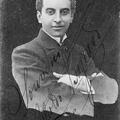
Leopoldo Dagradi (1871-1928) was an Italian operatic tenor who studied at the Regio Conservatorio of Milan, receiving his diploma in 1898. His professional journey began in 1900; this card, autographed by him, would have been given away when he was
Victoria Gardens, now known as Veermata Jijabai Bhosale Udyan or Rani Bagh is Mumbai's oldest public garden and was established in 1862 and spans 50 acres in the Byculla area.
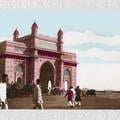
A triumphal arch erected to commemorate the visit of King George V and Queen Mary in 1911, it was completed in its present form in 1924. The Gateway of India was built in the Indo-Saracenic architectural style, combining multiple design elements and
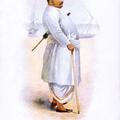
A fine portrait by M.V. Dhurandhar of a Gujarati broker. Gujrati brokers played a pivotal role in Bombay's commercial development during the late 19th and early 20th centuries.
In 1905, a significant exhibition was organized in Bombay (now Mumbai) that marked an important moment in India's colonial and nationalist history. Planned to commemorate the visit of the Prince of Wales (later King George V) to India.
Devika Rani was a pioneering figure in Indian cinema, often hailed as the "First Lady of Indian Cinema." Born on March 30, 1908, in Visakhapatnam, she was the grand-niece of the Nobel Prize-winning poet Rabindranath Tagore.
Built between 1867 and 1869, Watson's Hotel was India's first cast-iron building and one of the earliest examples of prefabricated architecture.