Circular Walk Gulmarg Kashmir

Probably printed by Raphael Tuck & Co. in London on behalf of Hartmann, one of the earliest Tuck-printed set of 6 postcards of India, likely all made by the same unknown Aquarelle painter.

Probably printed by Raphael Tuck & Co. in London on behalf of Hartmann, one of the earliest Tuck-printed set of 6 postcards of India, likely all made by the same unknown Aquarelle painter.
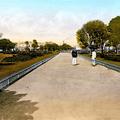
The garden in front of the Victoria Memorial is sometimes still called Curzon Gardens.
Lord Curzon was the Viceroy of India from 1899 to 1905. He constructed Victoria Memorial in memory of Queen Victoria, the British monarch who died in 1901 after
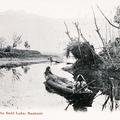
Fred Bremner was one of the first postcard publishers of Kashmir, offering numerous cards of the Princely State based on photographs he tool there around 1900.
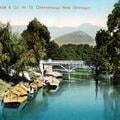
An exceptionally well-reserved postcard, with the deep blue of the water reflecting how these early color postcards appeared as jewels to consumers who had not seen printed color images so widely and inexpensively available until shortly after 1900.
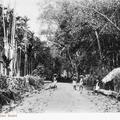
Likely the main ascent from the plains up to Conoor and onward to Ooty, the ascent into the Nilgiris, and today better known as Kallar Ghat/the Conoor Ghat Road. Nicolas & Co.
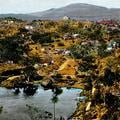
The hill station of Mount Abu, formerly part of the Chauhan Kingdom of Rajasthan, was the summer resort of the Rajput rulers. A green oasis in the barren landscape of Rajasthan.
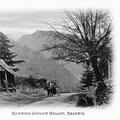
Among the earliest of Fred Bremner's Kashmir postcards, note how carefully the scene has been composed for what would have been a large format albumen shot during a trip he made about 1903: the man seated below the shed, the donkey cart on the road,
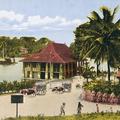
Kandy is still the religious and cultural capital of Sri Lanka, founded in the 14th Century capital of the Sinhalese kingdom from 1592-1815. The name Kandy is derived from the Sinhalese "Kanda uda pas rata", which means "five districts in the
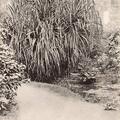
The “screw pine” at the Horticultural Gardens in Madras refers to Pandanus species (often Pandanus utilis / Pandanus odorifer), striking monocot trees with spiralling leaves and stilt‑like aerial roots that were prized as ornamental and economic
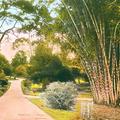
These 600 year old gardens are near Kandy.
Originally created in the reign of the Sinhalese King Wickramabahu III during the 14th century, these gardens were improved by his successors and later by the English after their conquest of Kandy.
