Natives Jetty, Karachi
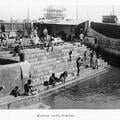
By the 1920s, Karachi's port had become one of the most commercially significant in the British Empire — by 1910, it was said to already be handling more wheat than any other port in the British Empire.
By the 1920s, Karachi's port had become one of the most commercially significant in the British Empire — by 1910, it was said to already be handling more wheat than any other port in the British Empire.
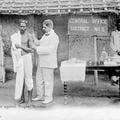
Postmarked May 7, 1904, Sea Post Office, Mumbai. Addressed to “Miss. R. Kennedy, Viewmont Drive, Gilshochill, Mary Hill, Glasgow, Scotland.”
“Dear Ruby, when I see you I shall be able to explain this p.c. [postcard] to you. With my love, John [sp?]”
![[Unidentified Camp]](https://www.paperjewels.org/sites/default/files/styles/square_thumbnail/public/slides/camp_0.jpg?itok=tjzsuyNx "[Unidentified Camp]")
This postcard probably shows a scene near Ravi Varma's studios outside Bombay [Mumbai] near the Karli temples.
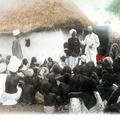
Informative preaching sessions in villages were usually held in the central part of the villages by American and British missionaries.
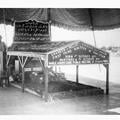
Sharif al Mujahid in his book In Quest of Jinnah Diary, Notes and Correspondence of Hector Bolitho (pp. 51-2), which collates many unpublished pieces by Jinnah's first biographer, includes this excerpt dated 11 April [1952]:
"Visit to Liaquat Gardens
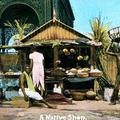
This well-posed image of a fruit and spice store is appropriately shadowed by the iron framed structure behind it.
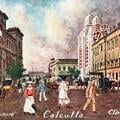
Sujaan Mukherjee writes of Frank Clinger Scallan's postcards of Calcutta: "The artist may or may not have used photographs as reference, but unlike most photographs that depict churches, public buildings or trams, these drawings recall a city that is
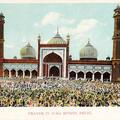
This is a superbly hand-tinted postcard, with both swathes of color (pink and blue) and individual color specs in the crowd mixed with the black ink of the collotype enhancing the effect of a real crowd praying.
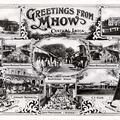
There are 14 images in this carefully constructed postcard of a cantonment town in Central India now known as Dr. Ambedkar Nagar (after the first great leader of India's Dalit community). The publisher, K.
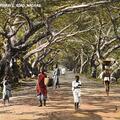
Mowbray's Road in Madras (now Chennai) was named after George Mowbray, who arrived in Madras in 1771. Originally a bullock cart track, it was acquired by George Mowbray in the late 18th century and led to Mowbray's garden house, which became the
