The Water Carrier (Bhistee)
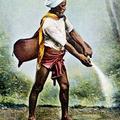
Bhistees supplied water to households and regiments
In the past, water carriers used cured hides of animals to carry water. Today animal hides have been replaced by bottles and jars of plastic.
Bhistees supplied water to households and regiments
In the past, water carriers used cured hides of animals to carry water. Today animal hides have been replaced by bottles and jars of plastic.
"In any town in India the European Club is the spiritual citadel, the real seat of the British power, the Nirvana for which native officials and millionaires pine in vain," wrote George Orwell in his first novel, Burmese Days (Chapter 2). First
Sharif al Mujahid in his book In Quest of Jinnah Diary, Notes and Correspondence of Hector Bolitho (pp. 51-2), which collates many unpublished pieces by Jinnah's first biographer, includes this excerpt dated 11 April [1952]:
"Visit to Liaquat Gardens
Abbottabad, located 50 km northeast of Islamabad in the Orash Valley, has a rich history spanning over 170 years.
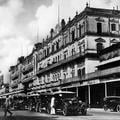
[Original handwritten message, verso] "25/11 Dear David, These are the funny old carriages which we see every day in Calcutta. The old lady has been shopping for Christmas."
An fascinating article on the artist behind this postcard, George Darby, by
A card with over-printed Christmas Greetings, hard to find but not unusual.
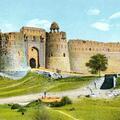
[Original caption] Wazir Khan's Mosque (Outer Part) Lahore.
Founded in 1900, this club for European and Indian members still operates in its original premises, a fine example of South Bombay's Indo-Sarcenic architecture. Prominent Indian members included Shri Bhulabhai J. Desai, H.H. Prince Aga Khan, H.H.
A unusual two-image postcard, almost the only one from that most prolific of publishers, Moorli Dhur & Sons. It shows two men on their sides, one of whom is smoking an opium pipe. Such scenes are almost never shown in postcards (exception: an opium
One wonders where this photograph was taken, possibly in the Murree hills but it could have been elsewhere too.
The process begins with collecting sap from coconut or palm flowers as these men are doing. Fresh sap, known as 'Neera,' is initially sweet, lukewarm, and non-alcoholic and collected in small pots attached beneath sliced unopened palm flowers.