The Great Burning Ghat in Benares
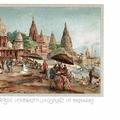
[Original German] Der Grosse Verbrennungs Platz in Benares [end]
One of the earliest artist-signed postcards of India.
[Original German] Der Grosse Verbrennungs Platz in Benares [end]
One of the earliest artist-signed postcards of India.
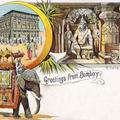
From an early "Greetings from" series by D.M. Macropolo & Co., a renowned Raj tobacconist with retail stores in Kolkata and Mumbai.

From an unusual later lithographic series, with some photographs by Raja Deen Dayal, and many of areas like this one around Hyderabad and including events like Lord Curzon's visit in 1903 to the State, it is nonetheless not at all clear that Dayal

This so-called "chromo-collotype" card was created by running an image derived from a black and white photograph through multiple color runs, after each color had dried, creating rich and translucent images.
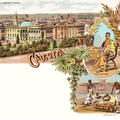
One of the earliest postcards of India, Calcutta, published by W. Rossler, a German or Austrian photographer in the city in 1897. Lithograph, Court sized, Printed in Austria. Undivided back.
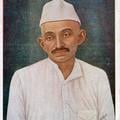
An early postcard of Gandhi, signed by K.L. [?] Joshi and dated 1921, not long after he had been termed the "Mahatma" by Rabindranath Tagore (1915) and had launched the First Non-Cooperation Movement in 1920.
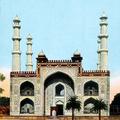
Akbar started building his own tomb at Sikandra, but it was completed by his son Jehanghir in 1605. Although it said that a central dome is missing on this edifice, it remains one of the most exquisite of Mughal gates.
[Verso] "23.8.11 Dear Molly,
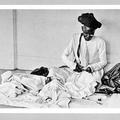
Nestor Gianaclis, like D. Macropolo & Co., another Greek-owned firm, was not primarily a photographer so much as a Greek tobacco merchant whose Calcutta office also issued collotype picture postcards and photographic prints in the early 1900s.
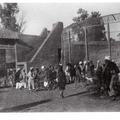
A rare candid shot of a zoo in colonial times. Apparently, Peshawar had a small zoo in the those times located in Shahi Bagh (the “Royal Garden”), a government-owned garden being developed into public pleasure grounds.