The Great Burning Ghat in Benares
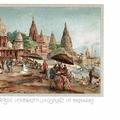
[Original German] Der Grosse Verbrennungs Platz in Benares [end]
One of the earliest artist-signed postcards of India.
[Original German] Der Grosse Verbrennungs Platz in Benares [end]
One of the earliest artist-signed postcards of India.
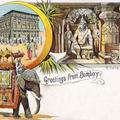
From an early "Greetings from" series by D.M. Macropolo & Co., a renowned Raj tobacconist with retail stores in Kolkata and Mumbai.

From an unusual later lithographic series, with some photographs by Raja Deen Dayal, and many of areas like this one around Hyderabad and including events like Lord Curzon's visit in 1903 to the State, it is nonetheless not at all clear that Dayal

This so-called "chromo-collotype" card was created by running an image derived from a black and white photograph through multiple color runs, after each color had dried, creating rich and translucent images.
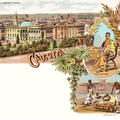
One of the earliest postcards of India, Calcutta, published by W. Rossler, a German or Austrian photographer in the city in 1897. Lithograph, Court sized, Printed in Austria. Undivided back.
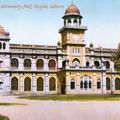
A landmark colonial-era "Indo‑Saracenic" or “Anglo‑Mughal” style building designed by Bhai Ram Singh, with a prominent central clock tower and domed corner elements.
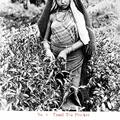
Andree, known for some striking postcard images, may have been Adolphus Williams, Jr. a photographer on York Street in Colombo.
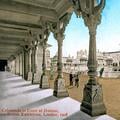
The Franco-British Exhibition (1908) was a major "world’s fair” held in west London (Shepherd’s Bush/White City) from 14 May to 31 October 1908, created to showcase British and French industry, art, and imperial power while publicly celebrating the
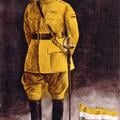
Netaji Subhas Chandra Bose (1897–1945), shown here in his Indian National Army (I.N.A.) uniform, was an Indian nationalist leader who broke with the Indian National Congress’s dominant nonviolent strategy and pursued independence through armed