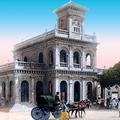
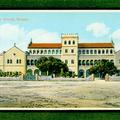
The Club, Mooltan
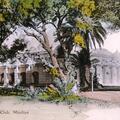
Constructed in 1880 by the Nawab of Bahawalpur of bricks made from mud from the Chenab River, the Multan Club has thirteen domes in what is called a Turkish style. Today it is the Army Garrison Mess, and hosts many weddings.
Constructed in 1880 by the Nawab of Bahawalpur of bricks made from mud from the Chenab River, the Multan Club has thirteen domes in what is called a Turkish style. Today it is the Army Garrison Mess, and hosts many weddings.
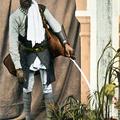
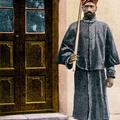
One could argue that the bhistee was the most common male postcard type at the turn of the 20th century.
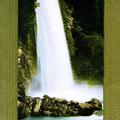
As the postcard business became increasingly competitive, especially after about 1905, printers and publishers went to great lengths with frames and colours to distinguish their products.
This hospital was built in the memory of Parsi trader Eduljee Dinshaw. Parsis started major property, shipping, hotel and beverage businesses in Karachi since the late 19th century.
[Verso, handwritten in ink] "Magway [sp?] Upper Burma, May 22/18
My dear Bunny
That little letter you penned hasnt come yet, but I am hoping it will reach me soon.
How do you like this hobby [postcard collecting presumably]?
Best love
Daddy x x
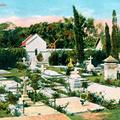
There are hundreds of thousands of European graves across the subcontinent, and perhaps thousands of such cemeteries, many attached to churches, and more or less abandoned by the British when they left, and now kept up by locals and private
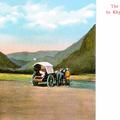
A lone cart contemplates entering the Khyber Pass on this early color postcard; nearly as daunting is the white space awaiting the sender's message.
Founded in 1861, this Roman Catholic-run school is one of the oldest in Karachi.
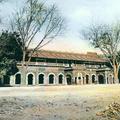
At this central location now stands the WAPDA, or Water and Power Development Authority headquarters, one of the modern architectural gems of Lahore.
Rai Mela Ram, a popular socialite and 19th century businessman a major role as contractor in the
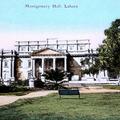
Built in the 1862, and named after one of the first British lieutenant-governors, it "carried European classical architecture into this distant and recently conquered province," according to Thomas R. Metcalf in An Imperial Vision Indian
