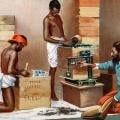
[Original caption] The amount of tea exported from Ceylon annually exceeds 150,000,000 lbs., and about 400,000 coolies from Southern India are employed in the tea gardens.
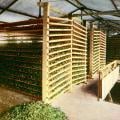
[Original caption] No. 7 - Withering: The First Manufacturing Process - The freshly plucked leaf is spread thinly on shelves of jute-hessian of wire and left to wither from 18 to 20 hours. The tea leaves are then cut to bring out the juice.
An unusual keyhole view by Plate & Co. The top part of the front of the card could also have been used for a message. Plate's Art Card series was distinguished for its rich use of color on a slightly embossed or corrugated halftone surface.
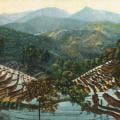
Traditional wet rice farming involves keeping the rice seeds and young plants submerged under water to keep weed infestation at bay until the young rice plants are well established.
The Sri Lankan tea industry grew from 250 acres under cultivation in 1876 to almost 400,000 acres in 1900.8 Some 150 million tonnes of tea were produced in 1900 worth 50 million rupees, half of Ceylon’s total exports.
Plate & Co., like many Ceylon-based firms, published semi-nude postcards of women, more common here than even in South India, including this card with a nicely placed purple stamp.
This postcard of the original inhabitants of Sri Lanka [Ceylon] was made from a photograph by Charles Scowen, one of the great photographers of the 19th century, as was likely taken in the 1870s.
One of my favourite postcards by the great Colombo publisher Plate & Co., simply because the girl's stare or startled expression is so memorable. Although I used the color version in the book, this seems just as gripping. What is she looking at?