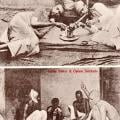
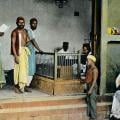
A unusual two-image postcard, almost the only one from that most prolific of publishers, Moorli Dhur & Sons. It shows two men on their sides, one of whom is smoking an opium pipe.
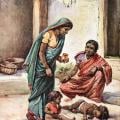
Evelyn Stuart Hardy (1865-1935), the artist who signed this card, was a British illustrator and author known for her contributions to children's literature and periodicals in the late 19th and early 20th centuries.
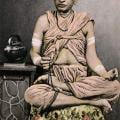
A sanyasi, also spelled sannyasi, refers to a Hindu ascetic or religious renunciant who has given up worldly possessions and attachments to pursue spiritual goals. The word sanyasi has its roots in Sanskrit.
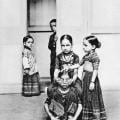
Postmarked in Bombay Nov. 19, 1910 and addressed to Miss Louella Shoemaker, Freeport, Illinois, USA: "Bombay, India 11/18-1910. Dear Daughter: Greeting. I thought you would like to see how little girls play 'hide and seek' in India.
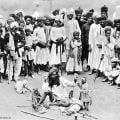
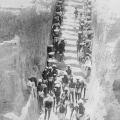
While it is unclear where and when this postcard was taken, it could have been in 1899-1900 when there was a large famine in Hyderabad with relief works photographed by Raja Lala Deen Dayal.
Although opium was a major crop in the rise of the East India Company, and India the major producer of opium sent to China, with production carefully taxed and recorded, barely a handful of postcards seem to acknowledge the crop and its manufacture.
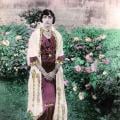
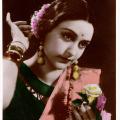
Naseem Banu (4 July 1916 – 18 June 2002) was a prominent Indian actress who rose to fame in the 1930s and 1940s. Known for her exceptional beauty, she was often referred to as "Pari-Chehra" (fairy face).
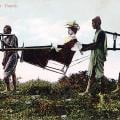
While the word "dandy" suggests being fashionable, and may be a secondary meaning, the word is said to actually come from "dandi" or the Hindi/Urdu word for stick, which are used to distribute the woman's weight across them men's shoulders.