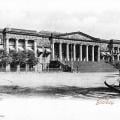
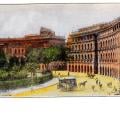
An early view of what is now The Asiatic Society. John Murray's Handbook for Travelers in India Burma and Ceylon (1938) has this description of what was once the Town Hall:
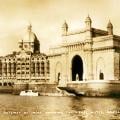
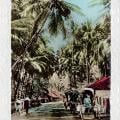
A rare Tuck's "Real Photograph" postcard of India, which they seem to have offered in response to the market around the 1930s. The Mexican writer Octavio Paz describes the scene in 1951 when he first approached Bombay by ship:
Among the earliest postcards of Bombay from a photograph. One can see the title and photographer inscribed at the bottom of the original glass negative, and the hand-tinting is done in large blocks.
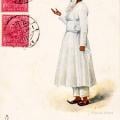
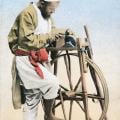
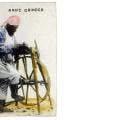
Knife grinders are a vanishing craft. Doing this at home before electric knife sharpeners was difficult. Knife grinders would take their sharpening wheels from door to door and take care of the problem.
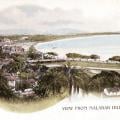
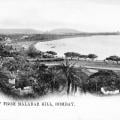
Clifton & Co., the first big Bobby-based publisher had numerous versions of this card. This keyhole-style view – a briefly popular postcard type – works well with the curve of what is now Marine Drive opening out towards the waters of Back Bay.
As competition among postcard publishers intensified between 1905 and 1910, each tried to outdo the other with new formats offered by the German printers who served much of the Indian market.