Baluchistan Begger [Beggar]
![Baluchistan Begger [Beggar]](https://www.paperjewels.org/sites/default/files/styles/square_thumbnail/public/slides/baluchistan-beggar.jpg?itok=OPmDWHAl "Baluchistan Begger [Beggar]")
This apparently one-legged man is being used here to represent a type, but what is most eye-catching is the way the veins in his arms seem so like the cracks in the wall.

This apparently one-legged man is being used here to represent a type, but what is most eye-catching is the way the veins in his arms seem so like the cracks in the wall.
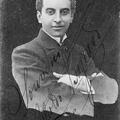
Leopoldo Dagradi (1871-1928) was an Italian operatic tenor who studied at the Regio Conservatorio of Milan, receiving his diploma in 1898. His professional journey began in 1900; this card, autographed by him, would have been given away when he was
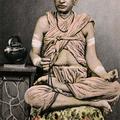
A sanyasi, also spelled sannyasi, refers to a Hindu ascetic or religious renunciant who has given up worldly possessions and attachments to pursue spiritual goals. The word sanyasi has its roots in Sanskrit.
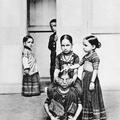
Postmarked in Bombay Nov. 19, 1910 and addressed to Miss Louella Shoemaker, Freeport, Illinois, USA: "Bombay, India 11/18-1910. Dear Daughter: Greeting. I thought you would like to see how little girls play 'hide and seek' in India.
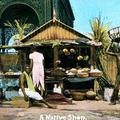
This well-posed image of a fruit and spice store is appropriately shadowed by the iron framed structure behind it.
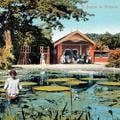
Victoria Gardens, now known as Veermata Jijabai Bhosale Udyan or Rani Bagh is Mumbai's oldest public garden and was established in 1862 and spans 50 acres in the Byculla area.
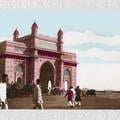
A triumphal arch erected to commemorate the visit of King George V and Queen Mary in 1911, it was completed in its present form in 1924. The Gateway of India was built in the Indo-Saracenic architectural style, combining multiple design elements and
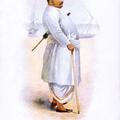
A fine portrait by M.V. Dhurandhar of a Gujarati broker. Gujrati brokers played a pivotal role in Bombay's commercial development during the late 19th and early 20th centuries.
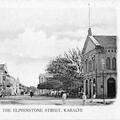
Nusserwanjee & Co. was a prominent business enterprise in Karachi during the British colonial period, owned by the Parsi Nusserwanjee family.
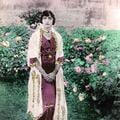
These real photo was both hand-tinted, and, unusually, golden glitter also applied on the woman's wrap.
