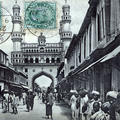
Hyderabad, The Char Minar
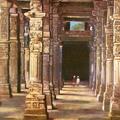
[Original caption] Colonnade, Hindoo Pillars, Kutub Minar. The Pillars, taken by the Mughal conquerors of India from a Hindoo temple, were recut to free them from idols and used to form the colonnade to the mosque.
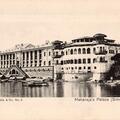
Sher Garhi Palace was a royal residence and power center on the banks of the Jhelum in Srinagar.
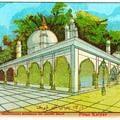
Bhargava’s firm specialised in chromolithographic “god pictures” and other devotional or pious imager of Hindu deities, Sikh gurus, Islamic sites and calligraphic posters.
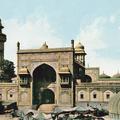
Known for its beautiful "faience" work, a type of fine pottery-tile artwork, the historic Wazir Khan mosque in the walled city of Lahore was built during the reign of the Mughal Emperor Shah Jahan by Shaikh Ilm-ud-din Ansari between 1634 and 1641.
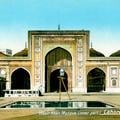
The inner courtyard (sahn) of Lahore’s Wazir Khan Mosque built in the 17th century is the mosque’s central open space, organized to frame the prayer hall (on the west) and surrounded by arched cloisters that create a rhythmic, enclosed “room” of sky.
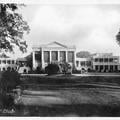
The Madras Club is a colonial-era gentlemen’s club in Chennai, founded in 1832 as an exclusive European male preserve and now one of India’s oldest surviving social clubs.
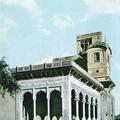
One of the most ornate and lavish rooms within the Lahore Fort. Built during the Mughal emperor Shah Jahan's 17th century reign, the Shish Mahal ("Shish" means mirror) is noted for its beautiful mirror work.
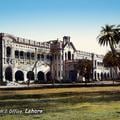
Probably built in the early 20th century, the Public Works Department built and maintained most of the civic infrastructure in Lahore during the colonial period, including courts, colleges and museums.
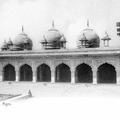
The Moti Masjid inside Agra Fort was a private royal mosque commissioned by the Mughal emperor Shah Jahan and built in the mid-17th century, using white marble that gave it the “pearl” name.
