Pearl Mosque, Agra
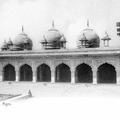
The Moti Masjid inside Agra Fort was a private royal mosque commissioned by the Mughal emperor Shah Jahan and built in the mid-17th century, using white marble that gave it the “pearl” name.
The Moti Masjid inside Agra Fort was a private royal mosque commissioned by the Mughal emperor Shah Jahan and built in the mid-17th century, using white marble that gave it the “pearl” name.
![[Ritz Hotel]](https://www.paperjewels.org/sites/default/files/styles/square_thumbnail/public/slides/ritz-hotel_0.jpg?itok=6mJycLJX "[Ritz Hotel]")
Originally the Hill Fort Palace of the Nawab of Hyderabad, the Government of India leased the property to the RItz Hotel Company around 1955 which operated a hotel here for decades.
![[Connaught Circle, Delhi]](https://www.paperjewels.org/sites/default/files/styles/square_thumbnail/public/slides/connaught-circle_0.jpg?itok=eaSsOHfD "[Connaught Circle, Delhi]")
Connaught Circle was built as part of Lutyen's Delhi between 1929 and 1933 to be the principal commercial plaza of New Delhi. Rangoon Studio was a well-known photographic studio at 58, Janpath and seems to have closed later as rents rose.
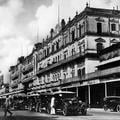
The Grand Hotel on Chowringhee Road, colonial Calcutt's main corridor, is now the Oberoi Grand Hotel. Built in the late 19th century, it was used by thousands of troops in World War II and today is among the most luxurious in India.
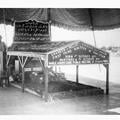
Sharif al Mujahid in his book In Quest of Jinnah Diary, Notes and Correspondence of Hector Bolitho (pp. 51-2), which collates many unpublished pieces by Jinnah's first biographer, includes this excerpt dated 11 April [1952]:
"Visit to Liaquat Gardens
![Abtabad [Abbottabad]](https://www.paperjewels.org/sites/default/files/styles/square_thumbnail/public/slides/abtabad.jpg?itok=xEXUDn9F "Abtabad [Abbottabad]")
Abbottabad, located 50 km northeast of Islamabad in the Orash Valley, has a rich history spanning over 170 years.
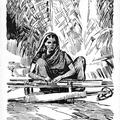
J.D. Gondhalekar (1909-1981) produced a series of at least ten postcards called "Indian Topics" around 1942, among the few Indian-artist signed postcard series from colonial times.
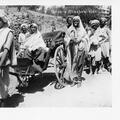
A curious real photo postcard, possibly taken at a Simla, of a local woman in a rickshaw, published in Lausanne, Switzerland.
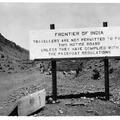
[Original handwriting, Verso] "Oct. 24/[19]29 Visitors to the Khyber [Pass] required to halt 3 mi. from this sign."
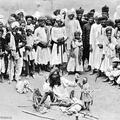
For all the popularity of monkey performers, their depiction on postcards, especially with a crowd watching (example without a crowd) is unusual.
