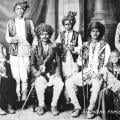
Karachi

R. Jalbhoy was a major Karachi photographer and postcard publisher at the turn of the century, who could often depict people and parts of the city that fell off the usual tourist or landmark circuit. Note the shoes on the sitters in this studio shot.
Read more

Millions of refugees moved between the new states of India and Pakistan in 1947, and Johnny Stores, run by the photographer Janki das since about the 1920s, was one of the rare photographers of both sides.

Read more

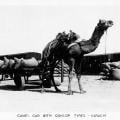
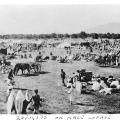
A captivating blend of technologies: in the back railway cars, transporting bags of wheat which find their way on to camel carts with brand name rubber tires. Camels were a popular means of transport in Karachi through the 1950s.

Read more

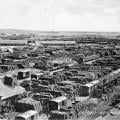
By the 1920s, Karachi's port had become one of the most commercially significant in the British Empire — by 1910, it was said to already be handling more wheat than any other port in the British Empire.

Read more

Sharif al Mujahid in his book In Quest of Jinnah Diary, Notes and Correspondence of Hector Bolitho (pp. 51-2), which collates many unpublished pieces by Jinnah's first biographer, includes this excerpt dated 11 April [1952]:

Read more

By 1899, Karachi had become the largest wheat and cotton exporting port in South Asia. The port's significance in wheat exports grew rapidly, and by 1910, Karachi handled greater quantities of wheat than any other port in the British Empire.

Read more

Motilal Nehru was the father of Jawaharlal Nehru, and a very popular politician during the early struggle for Independence, and twice President of the Indian National Congress.

Read more