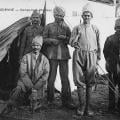
A striking portrait of individuals, young and old, who served in the British Indian army that fought in France during World War I. This card is postmarked 1915, and was used to "offer a handshake to a friend."
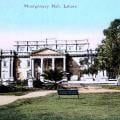
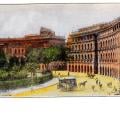
Built in the 1862, and named after one of the first British lieutenant-governors, it "carried European classical architecture into this distant and recently conquered province," according to Thomas R. Metcalf in An Imperial Vision Indian…
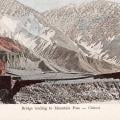
There are few postcards from Chitral available at the turn of the century, a remote set of mountain valleys that figured in the explorations and struggles around the "Great Game" with Tzarist Russia in the 19th and early 20th centuries.
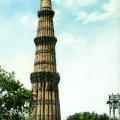
Qutub Minar is among the tallest brick minarets in the world, an important early example of Indo-Islamic architecture built between 1199-1220 ACE. The Mexican writer Octavio Paz described it in his book In Light of India (1995):
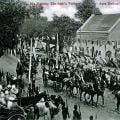
On January 15, 1907 the Afghan Amir Habibullah Khan visited Agra where he was shown major monuments and received in great style. An early example of a current-affairs postcard, where recent events were quickly memorialized by publishers.
Among the earliest postcards of Bombay from a photograph. One can see the title and photographer inscribed at the bottom of the original glass negative, and the hand-tinting is done in large blocks.