
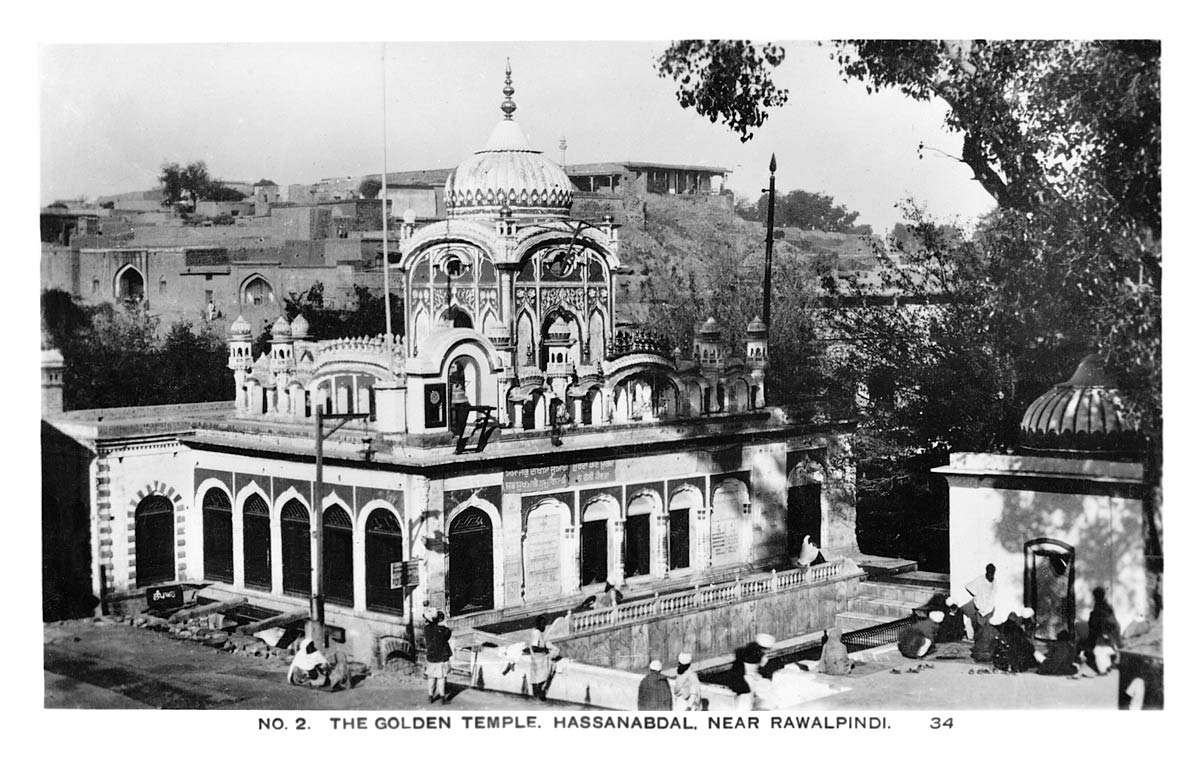
The Gurdwara Panja Sahib, is a highly revered Sikh shrine located in the town of Hasanabdal in Attock District, Punjab, Pakistan is associated with Guru Nanak, the founder of Sikhism. The shrine is named "Panja Sahib" because it houses a boulder with the imprint of Guru Nanak's hand. According to Sikh tradition, this miraculous handprint was left by Guru Nanak when he stopped a rock hurled at him by a local saint, Wali Qandhari, during a dispute over access to water. A spring of clear water flows from behind the boulder and fills a large pool (sarovar) within the gurdwara complex. This spring is considered sacred and is an integral part of the shrine's spiritual significance. The gurdwara was built in the Mughal architectural style by Maharaja Ranjit Singh in the 19th century. It includes a beautiful courtyard, a sarovar, and a two-story hostel for pilgrims. The handprint rock is embedded within the shrine's structure.
Gurdwara Panja Sahib is one of the most sacred places in Sikhism. It attracts thousands of pilgrims annually, especially during festivals like Baisakhi, when many pilgrims from India come to a temple which stands as a symbol of Guru Nanak's teachings and his emphasis on humility and service.