
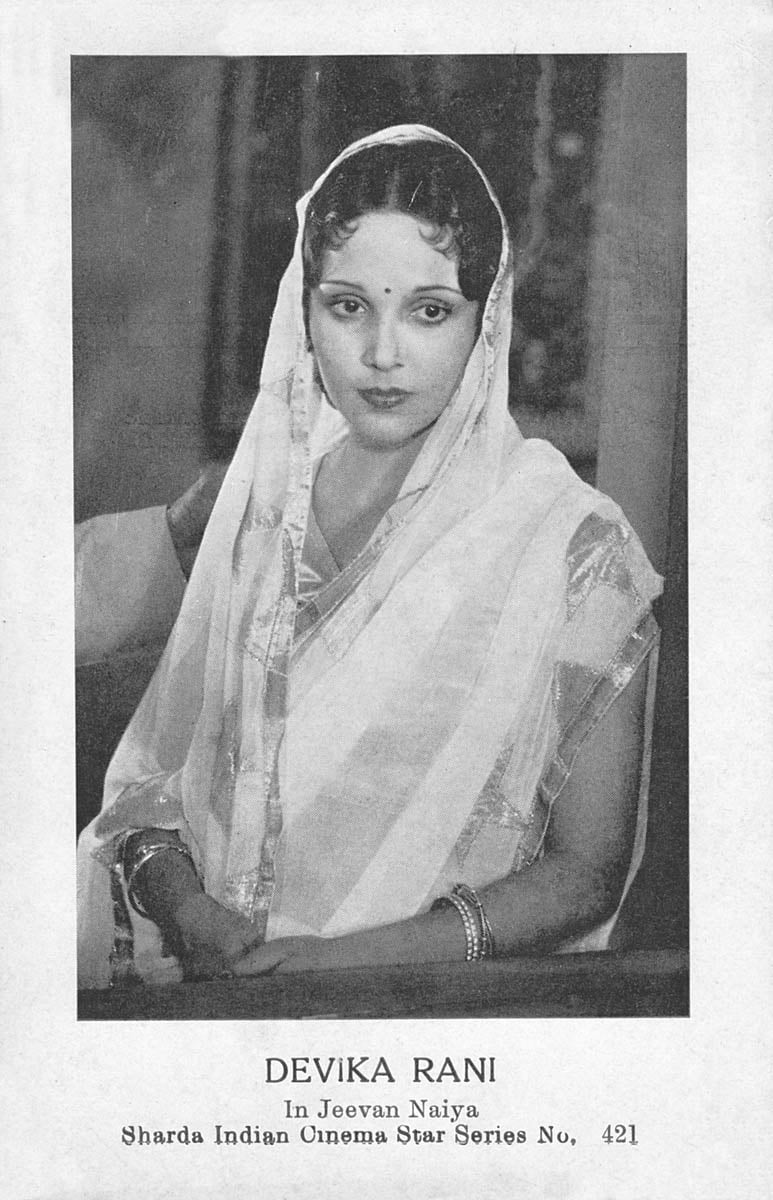
Devika Rani was a pioneering figure in Indian cinema, often hailed as the "First Lady of Indian Cinema." Born on March 30, 1908, in Visakhapatnam, she was the grand-niece of the Nobel Prize-winning poet Rabindranath Tagore. Her father was Colonel Manmatha Nath Chaudhuri, the first Indian Surgeon General of Madras Presidency. She received her education in England, where she studied architecture, textile design, and decorative arts. This exposure to Western art and culture would later influence her filmmaking. In 1928, she met Himanshu Rai, a prominent filmmaker, and they married a year later. She joined Rai's filmmaking company, Bombay Talkies, and began her career in cinema. Her debut film was Karma (1933), a silent film that was also released in a Hindi version. This marked her as one of the first Indian actresses to act in a talkie.
Devika Rani quickly gained recognition for her acting talent and captivating screen presence. She starred in several successful films produced by Bombay Talkies, including Jawani Ki Hawa (1935), Achhut Kanya (1936), and Nirmala (1938). Jeevan Naiya was released in 1936 and was Ashok Kumar's debut; he went on to have an incredibly successful career, becoming one of the most celebrated actors in Indian cinema history. Her on-screen pairing with Ashok Kumar became immensely popular, and they were considered one of the first romantic couples of Indian cinema.
Jeevan Naiya touched upon social issues like the ostracization of dancing girls and their children, which was quite bold for its time. Devika Rani was known for her bold and unconventional roles, challenging societal norms and pushing boundaries in Indian cinema. She was also instrumental in shaping the filmmaking style and techniques of Bombay Talkies, contributing to costume design, art direction, and even story development.
After the death of Himanshu Rai in 1940, Devika Rani took over the management of Bombay Talkies for a few years before eventually retiring from the film industry. She married the Russian painter Svetoslav Roerich in 1945 and moved to the Himalayas, where she focused on her artistic pursuits. She received the Dadasaheb Phalke Award in 1969, the highest honor in Indian cinema, for her outstanding contributions to the industry.